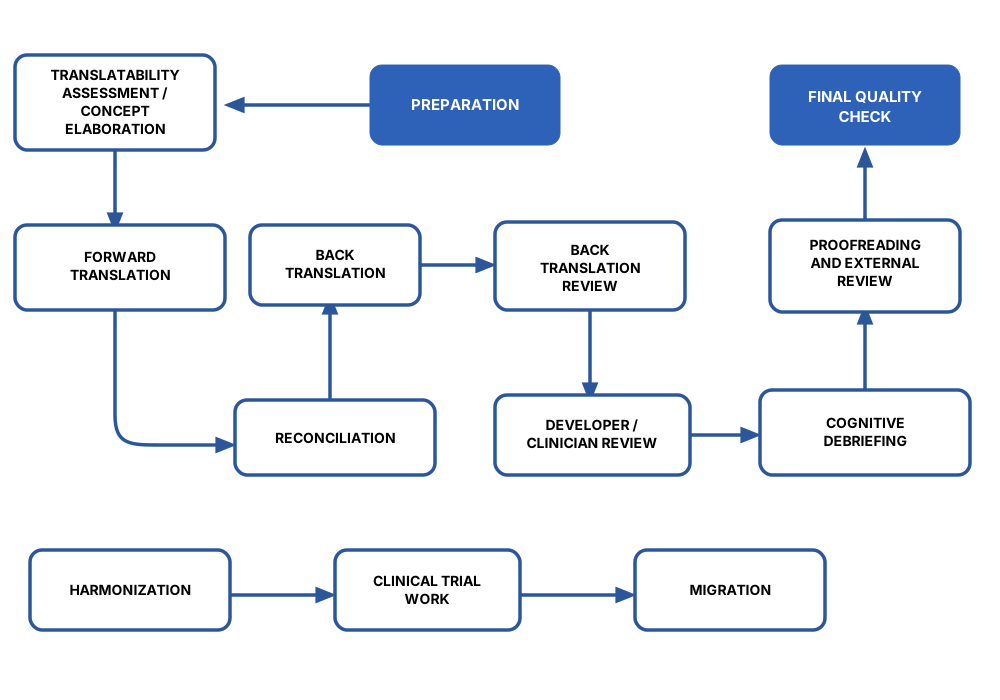
A global medical device manufacturer preparing for CE marking under MDR contracted NN Translations to translate and localize the Instructions for Use (IFU) and consumer leaflet for their aesthetic product. The project involved translation and revision into 11 European languages, ensuring the materials met the requirements for multilingual compliance, user comprehension, and regulatory readiness under EU Medical Device Regulation (MDR).
With tight timelines and high expectations, our client relied on us to coordinate a multilingual team, deliver compliant and high-quality content, and navigate both linguistic and operational complexity across multiple markets.
The Challenge
Medical device documentation translation requires more than linguistic accuracy: it also demands terminology consistency, clarity and traceability to support regulatory requirements. This project presented several core challenges:
Coordinating 22 linguists (translators and revisers) with subject-matter expertise
Ensuring MDR-compliant terminology and documentation structures
Managing a robust revision and approval loop across 11 languages
Maintaining terminological and stylistic consistency
Flagging and addressing inconsistencies and formatting issues in the source text
Delivering within tight timelines while ensuring compliance and accuracy
Our Approach
At NN Translations, our services are supported by our ISO 9001 and ISO 17100 certifications. We strictly followed these certified processes throughout the project to ensure quality, traceability, and client satisfaction. For more on the quality management standards behind these processes, read our ISO in Life Sciences Translations: A Complete Framework for Medical Device Manufacturers article.
Here’s how we handled this multilingual MDR challenge:
Specialized Linguist Selection
We assembled dedicated translator–reviser teams for each language, selecting linguists with substantial experience in medical device content, MDR compliance and EMDN.
Translation & Independent Revision
Each file underwent a two-step linguistic process: initial translation by a subject-matter expert, followed by an independent revision to ensure clarity, consistency, and full alignment with regulatory expectations. Explore how these quality steps fit into a structured multilingual process in our Medical Device Translation Workflow: Quality, Compliance & Long-Term Value article.
Change Approval Loop
Revised files were returned to the original translators to accept or reject changes, ensuring accountability, linguistic alignment, and full traceability of edits, the core principles of our ISO-certified workflow.
Terminology Alignment
Our team carefully monitored terminology consistency during translation and revision and addressed discrepancies as they arose. This approach reinforced our standard practice of establishing glossaries for MDR-compliant projects, ensuring harmonized use of regulatory and product-specific terms across all languages.
Source Review & Client Communication
We identified inconsistencies in term usage (e.g., “undesirable effects” vs. “side effects”) and formatting issues in the source text. We flagged these clearly to the client and applied harmonized solutions (such as correcting section references) across all languages.
Client and In-Country Review Following translation and independent revision, the language versions were reviewed by the client’s local teams and distributors. Our linguists carefully assessed their feedback, incorporated approved terminology preferences and resolved any comments requiring further linguistic clarification. Agreed changes were applied consistently throughout the relevant documents, maintaining alignment across the IFU and patient leaflet. This collaborative review stage ensured that the final versions reflected both regulatory and linguistic requirements and the terminology preferred by the client’s in-country stakeholders before final approval and delivery.
Product Name & Branding
As agreed in advance, we retained the product name and brand placeholders in English in all target language versions to support global brand consistency and regulatory clarity.
Final QA & Delivery
We performed a final quality control check across all files, ensuring formatting, completeness, and compliance before final delivery ready for regulatory submission.
MDR compliance checklist - verifying terminology, structure, labeling references, and documentation format across all target languages.
The Result
11 languages delivered on time and in full compliance with MDR expectations
Consistency and traceability ensured through ISOs processes
Terminology alignment achieved across all versions
Client confidence strengthened through proactive quality management and transparent communication
Internal best practices reinforced, including glossary development and early issue detection
Multilingual MDR compliance requires more than accurate translation. It demands structured, certified processes, expert coordination, and a strong understanding of the regulatory landscape.
At NN Translations, our ISO 9001 and ISO 17100 certifications are more than a formality. they are the backbone of the quality and consistency we deliver. We help medical device companies navigate the complex intersection of language, regulation, and risk, ensuring that every word supports safety, usability, and global market success.
Planning a multilingual MDR-compliant project?
Let’s connect. We’d be glad to support your next medical device project with clarity, consistency, and confidence.
Explore Our Medical & Regulatory Translation Services →
Explore Our IFU Content Optimisation Services →
Explore Our Medical Device and IVD Resources →