


Services
We support pharmaceutical and medical device companies with Readability Testing of Patient Information Leaflets (PILs) and medical device usability testing, helping evaluate whether patient-facing information can be understood and whether medical devices can be used safely and effectively by their intended users.
Projects are coordinated according to the applicable regulatory framework, target users, markets and languages, working with experienced specialist testing partners where required.

Pharmaceuticals
Patient Information Leaflets need to provide information that patients can find, understand and use appropriately. We coordinate Readability Testing of Patient Information Leaflets (PILs) through experienced specialist partners, supporting pharmaceutical companies across project planning, testing, reporting and, where appropriate, bridging strategies.
Depending on the project, support may include:
initial review of the PIL for patient-friendly language, content and layout;
identification and analysis of key safety messages;
questionnaire development;
recruitment of appropriate test participants;
pilot testing;
two rounds of main testing;
analysis of participants' ability to find and understand key information;
coordination of text or layout improvements identified during testing;
preparation of the final Readability Testing report;
bridging evaluation, bridging reports or focused testing where appropriate
Bridging
Where a successfully tested leaflet already exists for a sufficiently similar product, bridging may provide an alternative to conducting a completely new full readability test.
We can assess the proposed leaflet against the previously tested parent leaflet and supporting Readability Testing documentation, considering factors such as content, key safety messages, layout and writing style. Where appropriate, we can then coordinate the required bridging documentation or further testing.
Medical Devices
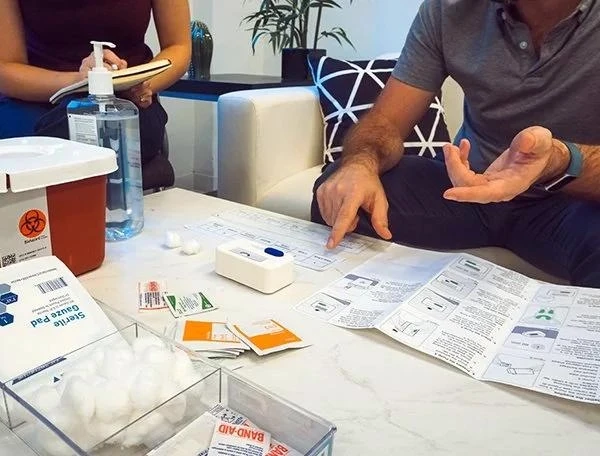
Medical device usability testing evaluates how intended users interact with a device, its user interface and associated information, helping identify potential use difficulties, use errors and use-related risks that may affect safe and effective use.
Usability considerations may extend beyond the device itself to associated materials such as Instructions for Use (IFUs), labelling, user manuals and quick guides, particularly where users rely on this information to understand how the device should be used.
NN Translations coordinates medical device usability testing through experienced specialist usability and human-factors partners, with the scope adapted to the device, intended users, use environment, target markets and applicable regulatory requirements.
Depending on the project, support may include:
coordination with specialist usability and human-factors partners;
definition and recruitment of representative intended users;
planning and coordination of usability testing activities;
preparation, translation and linguistic review of testing materials;
evaluation of translated IFUs, labelling and other user-facing materials within the intended-use context;
coordination of multilingual or in-country testing where required;
management of linguistic queries and stakeholder feedback;
coordination of applicable testing documentation and deliverables
Connected Support
Usability testing can be coordinated with our wider medical device services where required, providing continuity between source content preparation, translation and evaluation of user-facing information.
Talk to us about your product or device, intended users, target markets and languages, user-facing materials, testing requirements and planned timeline.